Evolution of Digital Marketing: Past, Present, and Future
The Foundation Era – Birth of Digital Marketing (1990–2005)
Digital marketing did not appear overnight. It evolved slowly as technology, consumer behavior, and the internet itself began to change how people accessed information. To understand modern digital marketing, it is essential to return to its foundation era, a period when the internet was new, experimentation was constant, and the basic rules of online promotion were being written for the first time.
This stage laid the groundwork for everything that followed. Search engines, websites, email marketing, and online advertising all emerged during this period. Even though the tools were simple, the ideas behind them remain relevant today.
Marketing Before the Internet
Before the internet became publicly accessible, marketing was dominated by traditional channels. Businesses relied on newspapers, magazines, radio, television, outdoor hoardings, and direct mail. Communication was one way. Brands spoke, and consumers listened. Measuring results was difficult, expensive, and often inaccurate.
Audience targeting was broad rather than precise. A television advertisement reached millions, but it was unclear how many viewers were interested or took action. Feedback cycles were slow, and optimization depended more on experience than data.
This environment created a strong need for a better, more measurable way to reach customers. That opportunity arrived with the rise of the internet.
The Arrival of the World Wide Web
The launch of the World Wide Web in the early 1990s marked a historic shift in communication. For the first time, information could be shared globally in real time. Websites became digital spaces where businesses could present information without relying on traditional media.
Early websites were basic. They used static HTML pages, limited design elements, and very little interaction. Most sites functioned like digital brochures, displaying company details, product descriptions, and contact information.
Despite their simplicity, these websites changed marketing forever. Businesses were no longer restricted by geography. A small company could reach international audiences at a fraction of the cost of print or television advertising. This was the beginning of online presence as a business necessity rather than an advantage.
As more companies went online, competition for visibility increased. This led directly to the rise of search engines.
The Rise of Search Engines and Information Discovery
As the number of websites grew, finding relevant information became a challenge. Early search engines emerged to organize the rapidly expanding web. Platforms such as Yahoo, AltaVista, and Ask Jeeves helped users navigate online content. However, results were often inconsistent and easily manipulated.
The launch of Google in 1998 transformed search behavior. Google introduced PageRank, an algorithm that evaluated websites based on the number and quality of links pointing to them. This approach improved search accuracy and rewarded websites that offered valuable content.
For marketers, this was a turning point. Visibility was no longer guaranteed by simply having a website. It depended on relevance, authority, and structure. This shift gave birth to search engine optimization, commonly known as SEO.
Early Search Engine Optimization Practices
In its earliest form, SEO focused on helping search engines understand website content. Marketers experimented with keyword placement, meta tags, directory submissions, and backlinks. The goal was simple: appear higher in search results and attract more visitors.
Because search algorithms were still developing, many tactics were basic and sometimes manipulative. Keyword stuffing and excessive link exchanges were common practices. While these methods worked temporarily, they also revealed the need for better search quality.
Even with its limitations, early SEO introduced a critical idea that still defines digital marketing today. Content must be discoverable. Visibility depends on aligning with how users search for information. This concept continues to shape content strategies, technical optimization, and user experience.
The Birth of Online Advertising
One of the most defining moments of early digital marketing was the launch of the first banner advertisement in 1994. Displayed on a popular technology website, the ad invited users to click, introducing interactivity into advertising.
This moment changed how advertising performance was measured. For the first time, marketers could track impressions, clicks, and engagement in real time. Advertising became data driven rather than assumption based.
Banner ads quickly gained popularity. Businesses began placing ads on high traffic websites to drive visitors to their own pages. This laid the foundation for modern display advertising and performance based marketing.
Although banner blindness would emerge in later years, the core idea of measurable advertising remained central to digital marketing evolution.
Email Marketing as a Direct Digital Channel
Email marketing emerged as one of the earliest and most powerful digital communication tools. It allowed businesses to communicate directly with users at minimal cost. Unlike traditional mail, email campaigns could be sent instantly and tracked accurately.
Early email marketing focused on announcements, newsletters, and promotional messages. Open rates and click through rates provided immediate feedback, enabling marketers to refine their messaging.
However, the rapid growth of email marketing also led to misuse. Unsolicited emails became common, resulting in spam and reduced trust. This challenge eventually led to regulations and permission based marketing practices.
Despite these issues, email marketing proved its long term value. Even today, it remains one of the highest return on investment channels in digital marketing.
Changing Consumer Behavior
The foundation era marked a significant shift in how consumers made decisions. Instead of relying solely on advertisements or sales representatives, users began searching for information themselves.
Consumers started comparing products online, reading reviews, and researching brands before making purchases. This behavior empowered users and reduced the control brands had over the buying journey.
Search intent became a critical factor. Understanding why users searched for specific terms became just as important as ranking for those terms. This shift introduced the idea that marketing should serve user needs rather than interrupt them.
This change in behavior permanently altered the relationship between businesses and customers. Trust, relevance, and accessibility became essential components of marketing success.
Measurement and Analytics Limitations
Although digital marketing introduced measurable channels, analytics tools were still limited during this era. Marketers could track basic metrics such as visits and clicks, but deeper insights were difficult to obtain.
There was little understanding of user journeys, attribution, or conversion optimization. Mobile usage was minimal, and most interactions occurred on desktop computers with slow internet connections.
Despite these constraints, marketers recognized the potential of data driven decision making. The demand for better tools and insights fueled innovation in the next phase of digital marketing.
Why the Foundation Era Still Matters
The importance of this stage extends far beyond its timeline. Nearly every modern digital marketing practice can be traced back to this era. SEO, online advertising, email marketing, and content driven visibility all originated during this period.
Understanding the foundation era helps marketers appreciate why certain principles still apply. Search engines continue to reward relevance. Users still value accessible information. Direct communication remains powerful when used responsibly.
This stage also serves as a reminder that digital marketing evolves continuously. Techniques change, platforms evolve, and algorithms improve, but the core goal remains the same. Connecting the right message with the right audience at the right time.
The Growth Era – Search and Social Media Revolution (2006–2015)
The second stage of digital marketing marked a period of rapid growth, experimentation, and maturity. During this era, digital marketing shifted from basic online presence to strategic, performance driven campaigns. Search engines became smarter, social media platforms reshaped communication, and content emerged as a long term marketing asset.
This period transformed digital marketing into a structured discipline. Businesses no longer asked whether they should invest in digital channels. The focus shifted to how effectively they could use them.
The Dominance of Search Engines
By the mid 2000s, search engines had become the primary gateway to the internet. Google emerged as the clear market leader, setting new standards for relevance and quality. Search was no longer just about keywords. It was about delivering the best possible answer to a user query.
Google introduced a series of algorithm updates that changed SEO practices permanently. These updates targeted low quality content, manipulative link building, and poor user experiences. As a result, search engine optimization evolved from technical tricks to a content and quality driven strategy.
Marketers began focusing on creating useful pages, improving site structure, and earning links naturally. Search engine visibility became a long term investment rather than a quick win.
The Evolution of Paid Search and PPC Advertising
Alongside organic search, paid advertising grew rapidly. Platforms such as Google Ads enabled businesses to bid on keywords and display ads directly within search results. This introduced a new level of control and predictability to digital marketing.
Pay per click advertising allowed advertisers to reach users with clear intent. Budgets could be managed precisely, and campaigns could be optimized based on performance data. This was a major improvement over traditional advertising models.
Landing pages became a critical component of paid campaigns. Instead of sending users to generic websites, marketers designed pages focused on specific actions. This approach improved conversion rates and highlighted the importance of user experience.
The Rise of Social Media Platforms
One of the most defining developments of this era was the rise of social media. Platforms such as Facebook, YouTube, Twitter, and LinkedIn changed how people interacted online. These platforms were not just social spaces. They became powerful marketing channels.
Social media introduced two way communication between brands and users. Businesses could engage directly with their audience, respond to feedback, and build communities. This level of interaction was not possible with traditional advertising.
For marketers, social media offered new opportunities for brand awareness, customer engagement, and content distribution. Organic reach was high in the early years, allowing brands to grow audiences without large advertising budgets.
Content Marketing Becomes a Strategy
As competition increased across search and social platforms, content quality became a key differentiator. Businesses began investing in blogs, videos, guides, and educational resources. This marked the rise of content marketing as a formal strategy.
Instead of focusing solely on promotions, brands started providing value through information. This approach helped attract users, build trust, and support long term SEO efforts.
Content marketing aligned closely with inbound marketing principles. The goal was to attract users naturally by addressing their questions and needs. Over time, this strategy proved more sustainable than interruptive advertising.
The Growth of Mobile and Local Search
The widespread adoption of smartphones during this era changed user behavior significantly. People began searching on the go, expecting fast and relevant results. This shift forced marketers to rethink website design and accessibility.
Mobile friendly websites became essential. Search engines started favoring sites that provided a good mobile experience. This led to the early stages of mobile optimization and responsive design.
Local search also gained importance. Users searched for nearby businesses, reviews, and directions. This created new opportunities for small and local businesses to compete online by optimizing for location based queries.
Social Advertising and Targeting
As social platforms matured, advertising options expanded. Social media advertising allowed precise targeting based on demographics, interests, and behavior. This level of targeting was unprecedented in traditional marketing.
Brands could deliver personalized messages to specific audience segments. This improved relevance and reduced wasted ad spend. Social advertising also supported visual storytelling through images and videos.
The combination of organic content and paid promotion made social media a core component of digital marketing strategies.
Analytics and Data Driven Decision Making
During this era, analytics tools became more advanced and accessible. Marketers gained deeper insights into traffic sources, user behavior, and conversions. Data started driving decisions rather than assumptions.
This shift encouraged continuous optimization. Campaigns were tested, refined, and scaled based on performance. A culture of measurement and experimentation became central to digital marketing success.
Understanding metrics such as bounce rate, conversion rate, and engagement helped marketers align their efforts with business goals.
Challenges and Growing Competition
While opportunities expanded, competition also increased. More businesses entered the digital space, making visibility harder to achieve. Organic reach on social media began to decline, and advertising costs gradually increased.
These challenges pushed marketers to focus on differentiation, branding, and long term strategies. Simply being online was no longer enough. Quality, consistency, and relevance became essential.
Why the Growth Era Still Matters
The growth era shaped many of the practices still used today. SEO became quality focused. Content marketing gained long term value. Social media evolved into a marketing channel rather than a novelty.
This stage also demonstrated the importance of adaptability. Platforms changed, algorithms evolved, and user behavior shifted. Marketers who embraced learning and experimentation succeeded.
Understanding this era provides insight into why modern digital marketing emphasizes user experience, content quality, and data driven strategies.
The Data Driven Era – Automation, Personalization, and Experience (2016–Present)
The third stage of digital marketing represents a period of refinement rather than discovery. By this time, digital channels were fully integrated into business strategies. The focus shifted from visibility to efficiency, from traffic to experience, and from broad messaging to personalization.
Data became the central force driving decisions. Marketers moved beyond basic metrics and began using insights to understand user behavior, intent, and long term value. This era redefined how brands connect with audiences across multiple touchpoints.
The Expansion of Marketing Technology
As digital marketing matured, specialized tools emerged to manage growing complexity. Marketing technology platforms allowed businesses to automate campaigns, manage customer data, and track performance across channels.
Customer relationship management systems became central to digital strategies. These platforms helped marketers store customer information, monitor interactions, and design structured journeys. Email, social media, paid advertising, and content distribution became connected rather than isolated efforts.
Automation reduced manual work and improved consistency. Campaigns could be triggered by user actions, behavior, or lifecycle stage. This allowed marketers to focus more on strategy and creativity.
Personalization Becomes the Standard
Consumers began expecting relevant experiences rather than generic messages. Personalization moved from a competitive advantage to a baseline requirement. Brands that failed to adapt risked losing attention and trust.
Personalized emails, product recommendations, and dynamic website content became common. Data such as location, browsing history, and past purchases informed these experiences.
The goal was not just customization but relevance. Successful personalization focused on delivering the right message at the right time without overwhelming the user.
The Rise of Content Experience and User Journey Mapping
Content continued to play a central role, but the approach evolved. Instead of creating isolated blog posts or videos, marketers began designing content experiences aligned with the customer journey.
Awareness, consideration, and decision stages were mapped carefully. Each stage required different types of content, tone, and calls to action. This approach improved engagement and conversion rates.
User experience became a ranking factor in search and a key driver of satisfaction. Page speed, navigation, readability, and mobile usability all influenced performance.
Video Marketing and Visual Storytelling
Video became one of the most effective content formats during this era. Platforms such as YouTube, Instagram, and later short form video networks changed how users consumed information.
Video allowed brands to communicate complex ideas quickly and emotionally. Tutorials, product demos, behind the scenes content, and live streams increased transparency and trust.
Search engines and social platforms prioritized video content, making it a valuable tool for both reach and engagement.
Influencer Marketing and Social Proof
As audiences grew skeptical of traditional advertising, peer influence gained importance. Influencer marketing emerged as a way to build credibility through trusted voices.
Brands partnered with creators who had established relationships with niche audiences. This approach felt more authentic than direct advertising and often delivered higher engagement.
Social proof in the form of reviews, testimonials, and user generated content also influenced purchase decisions. Trust became a measurable asset in digital marketing.
Advanced Analytics and Attribution Models
Analytics evolved significantly during this stage. Marketers gained access to detailed insights about user behavior across devices and channels.
Attribution models helped identify which touchpoints contributed to conversions. This improved budget allocation and campaign planning.
Data visualization and reporting tools made insights easier to understand and share across teams. Decisions became more collaborative and aligned with business objectives.
Privacy, Consent, and Trust
With increased data collection came greater responsibility. Privacy concerns grew as users became more aware of how their data was used.
Regulations such as data protection laws changed how marketers collected and stored information. Consent, transparency, and security became essential.
This shift forced marketers to balance personalization with respect for user privacy. Trust became a key factor in long term customer relationships.
Search Behavior and Zero Click Experiences
Search behavior continued to evolve. Users expected instant answers, often without clicking through to websites. Featured snippets, knowledge panels, and rich results became common.
This change required marketers to optimize content for visibility and clarity rather than just traffic. Providing concise and accurate information became as important as ranking.
Search engine optimization expanded to include structured data, intent matching, and content depth.
Omnichannel Marketing and Consistency
Consumers interacted with brands across multiple platforms and devices. Consistency across these touchpoints became critical.
Omnichannel marketing focused on creating a unified experience regardless of where interaction occurred. Messaging, design, and tone needed to align across email, social media, search, and websites.
This approach improved brand recognition and customer satisfaction.
Challenges of the Data Driven Era
While data provided clarity, it also introduced complexity. Managing multiple tools, platforms, and datasets required new skills and collaboration.
Over automation risked reducing authenticity. Marketers needed to ensure that efficiency did not replace human connection.
Success depended on using data as a guide rather than a replacement for understanding human behavior.
Why the Data Driven Era Matters
This stage reshaped digital marketing into a mature and accountable discipline. Performance could be measured accurately, experiences could be personalized, and campaigns could be scaled efficiently.
The lessons from this era emphasize balance. Technology enhances marketing, but relevance, trust, and value remain essential.
Understanding this stage helps marketers prepare for future changes where intelligence and empathy must work together.
The Intelligent Future – Human Centered and Trust Driven Digital Marketing
The fourth stage of digital marketing represents a future that is already taking shape. It is defined by intelligence, responsibility, and deeper human connection. Technology will continue to advance, but success will depend on how well brands use it to serve people rather than interrupt them.
This stage moves beyond tools and platforms. It focuses on meaning, ethics, and long term value. The future of digital marketing will not belong to the loudest brands, but to the most relevant and trustworthy ones.
The Shift Toward Human Centered Marketing
As digital experiences become more advanced, users expect brands to understand their needs without being invasive. Human centered marketing focuses on empathy, clarity, and usefulness.
Brands will need to design experiences that respect time, attention, and privacy. Simplicity will outperform complexity. Clear messaging will matter more than volume.
Successful marketers will listen more and speak less. They will focus on solving problems instead of pushing promotions.
Voice Search and Conversational Discovery
Search behavior will continue to evolve beyond typing. Voice search and conversational interfaces are changing how people discover information.
Users ask complete questions and expect direct answers. This shift requires content that mirrors natural language and clear intent.
Optimizing for conversational discovery means focusing on clarity, structure, and context. Brands that provide helpful answers will gain visibility and trust.
Immersive Experiences and Digital Interaction
Emerging technologies will reshape how users interact with brands. Augmented experiences, virtual environments, and interactive content will create deeper engagement.
These experiences will not replace traditional digital channels, but they will enhance storytelling and education. The focus will be on value rather than novelty.
Brands will need to ensure accessibility and usability as these experiences become more common.
Ethical Marketing and Responsible Data Use
Trust will be the most valuable currency in future digital marketing. Users are increasingly aware of how their data is collected and used.
Ethical marketing practices will become a competitive advantage. Transparency, consent, and fairness will define successful brands.
Regulations will continue to evolve, but ethical responsibility will go beyond compliance. Brands that respect users will build long term loyalty.
Content Quality Over Content Quantity
The future will reward depth and usefulness. Search engines and platforms will prioritize content that demonstrates experience, expertise, and credibility.
Short term tactics will lose effectiveness. Evergreen content, clear insights, and original perspectives will stand out.
Brands will need to invest in content that educates, guides, and supports users throughout their journey.
Community and Relationship Building
Digital marketing will shift from audience building to community building. Brands will focus on long term relationships rather than short term conversions.
Engagement will be measured by trust, loyalty, and advocacy. Communities will become spaces for dialogue rather than promotion.
This approach will require consistency, authenticity, and patience.
The Role of Automation in the Future
Automation will continue to support efficiency, but it will not replace human judgment. The future belongs to marketers who can balance technology with empathy.
Automation will handle repetitive tasks, while humans focus on creativity, strategy, and connection.
The most effective campaigns will feel personal, even when delivered at scale.
Skills That Future Marketers Will Need
Future digital marketers will need a blend of analytical and creative skills. Understanding data will remain important, but storytelling and critical thinking will matter just as much.
Adaptability will be essential. Platforms, algorithms, and user expectations will continue to change.
Learning will become a continuous process rather than a phase.
Why the Future of Digital Marketing Matters
The future stage is not about predicting tools. It is about understanding direction. Digital marketing will move toward relevance, responsibility, and respect.
Brands that prioritize users will outperform those that chase trends. The focus will be on meaningful impact rather than short term metrics.
This stage reminds marketers that technology should enhance human experience, not replace it.
Final Conclusion: The Complete Evolution of Digital Marketing
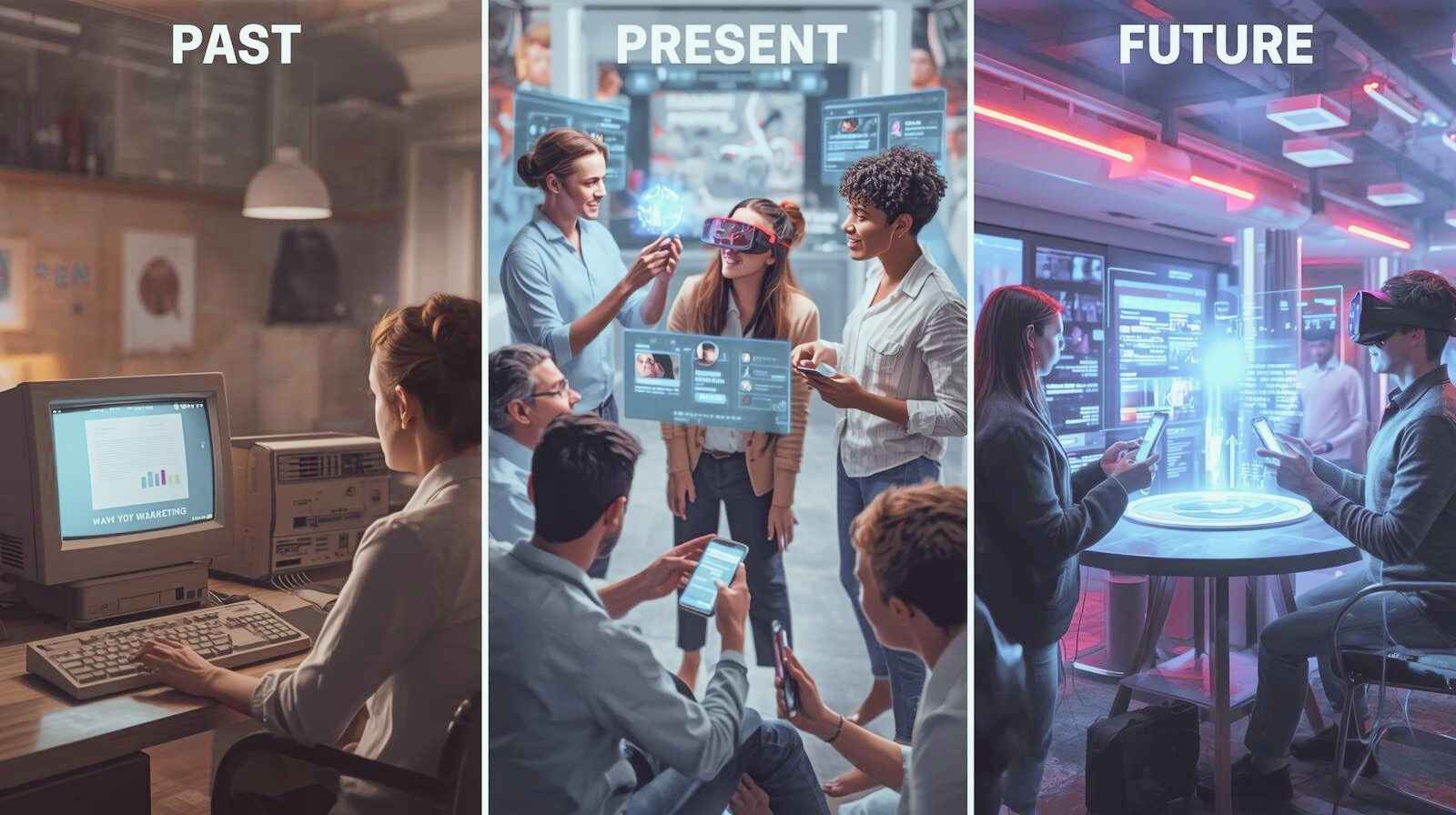
The evolution of digital marketing can be understood through four clear stages.
The foundation era introduced the internet, search engines, email marketing, and online advertising. It established the basic principles of visibility and measurement.
The growth era transformed digital marketing into a structured discipline. Search matured, social media emerged, and content became a strategic asset.
The data driven era refined digital marketing through automation, personalization, and advanced analytics. Experience and efficiency became central.
The future stage focuses on intelligence, ethics, and human connection. It emphasizes trust, relevance, and long term value.
Together, these stages show that digital marketing is not about tools alone. It is about adapting to how people search, interact, and make decisions. Understanding this evolution helps marketers build strategies that are sustainable, effective, and meaningful.